
Writing prompts for ChatGPT Kenya creator requires a blend of technical clarity and local context to ensure the AI provides relevant, high-quality results Humanize this sentence to fit Kenyan context,
If you’re a Kenyan creator using ChatGPT, you know that generic prompts just don’t cut it. To get results that actually feel like home, you have to mix clear instructions with a bit of local soul.. Whether you are a teacher in Murang’a drafting a lesson plan or a digital marketer in Nairobi, the way you “talk” to the AI determines the value you get back. Many users struggle with “shallow” outputs because they fall into common traps that hinder the AI’s ability to understand the Kenyan landscape.
1. Being Too Vague with Your Instructions(writing prompts for ChatGPT).
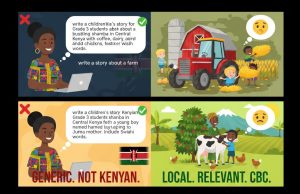
One of the most frequent mistakes to avoid when writing prompts is providing one-sentence instructions. For instance, asking ChatGPT to “write a story about a farm” will result in a generic American-style farm with corn and tractors. When you’re too vague, the AI misses the mark. For us in Kenya, generic prompts usually mean content that feels ‘foreign’ and totally out of touch with our local vibe.,Let’s be honest: generic prompts lead to generic results. If you aren’t specific, the AI misses the Kenyan vibe entirely, leaving us with content that feels out of place.. Instead, you should describe the setting: a small-scale shamba in Central Kenya with coffee trees and dairy cows. Providing the AI with “Persona” and “Goal” is the secret to professional results.
2. Ignoring the Kenyan Curriculum and Cultural Context.
If you are using AI for educational purposes, writing prompts for ChatGPT as a Kenyan creator without mentioning the CBC (Competency-Based Curriculum) is a recipe for disaster. Because the AI was trained on information from all over the world, it often defaults to US or UK slang and ways of doing things. If you want answers that feel Kenyan, you usually have to guide it back home.. Creators often forget to explicitly tell the AI to follow KICD guidelines or use Kenyan English spellings. To fix this, always include your target audience in the prompt, such as “Grade 4 students in a Kenyan primary school.”
3. Neglecting the ‘Step-by-Step’ Prompting Method(writing prompts for ChatGPT).
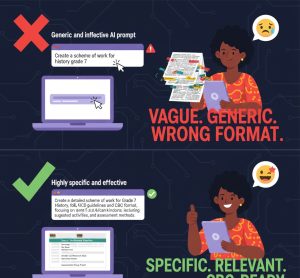
When writing prompts for ChatGPT, many creators try to get the final result in one go. This is a mistake known as “Single-Turn Prompting.”Don’t try to feed the AI the whole meal at once. It performs much better when you give it one task at a time, like building a house brick by brick. If you want a full scheme of work, start by asking for the breakdown of strands and sub-strands first.Checking in with the AI as you go keeps it on track. It prevents the machine from ‘daydreaming’ and making up facts that simply aren’t true.
4. Failing to Provide Examples (Few-Shot Prompting)
A common mistake to avoid is expecting the AI to guess your personal style or the specific format required by the TSC (Teachers Service Commission).The AI can’t see what’s in your head. If you have a specific look or feel in mind, you’ve got to give it a blueprint to follow.If you have an old lesson plan that you like, paste it into the chat and say, “Use this format to create a new one for Grade 7 Science.” This is called “Few-Shot Prompting,” and it is the fastest way to get human-like accuracy from ChatGPT.
5. Accepting the First Response Without Refinement.
Finally, many Kenyan creators take the first response they get and copy-paste it immediately. This is a missed opportunity to polish the output for a local audience. You should always ask the AI to “Make it more conversational” or “Add local Kenyan proverbs to make it more engaging.” Treat the AI as a junior assistant, not a final authority.
When generating educational content, it is vital to ensure your prompts align with the KICD curriculum standards, as this ensures the AI-generated material is actually usable in a Kenyan classroom.
If you find it difficult to structure these complex instructions manually, you can use our Free AI Prompt Generator which is already optimized to handle the heavy lifting for you.
Understanding how to communicate with Large Language Models is a key part of digital literacy in the AI era, helping creators worldwide stay competitive in an evolving job market.